NIS2 and national cybersecurity law
Run the information security office of an essential or important entity from one registry of suppliers, assets, risks, incidents, vulnerabilities, threats and tasks.
Typical requirementsNIS2 (EU) 2022/2555Nacionālās kiberdrošības likumsMK noteikumi Nr. 397ISO 27001
Who it is forEssential and important entities under NIS2, including state and municipal bodies and private operators covered by the Latvian National Cybersecurity Law.
NIS2 asks for more than a set of documents. The entity must know what it runs, who it depends on, which risks it carries and how incidents are handled, and its management body must approve and oversee the measures. In Latvia, the National Cybersecurity Law (Nacionālās kiberdrošības likums) transposes NIS2, and Cabinet Regulation No. 397 sets the minimum cybersecurity requirements, from governance and the cybersecurity manager role to incident classification, backups, encryption and outsourcing. Significant incidents are reported to CERT.LV, the national CSIRT, following the classification and reporting guidelines of the regulation, and entities submit a cybersecurity self-assessment report that evaluates how each requirement is met.
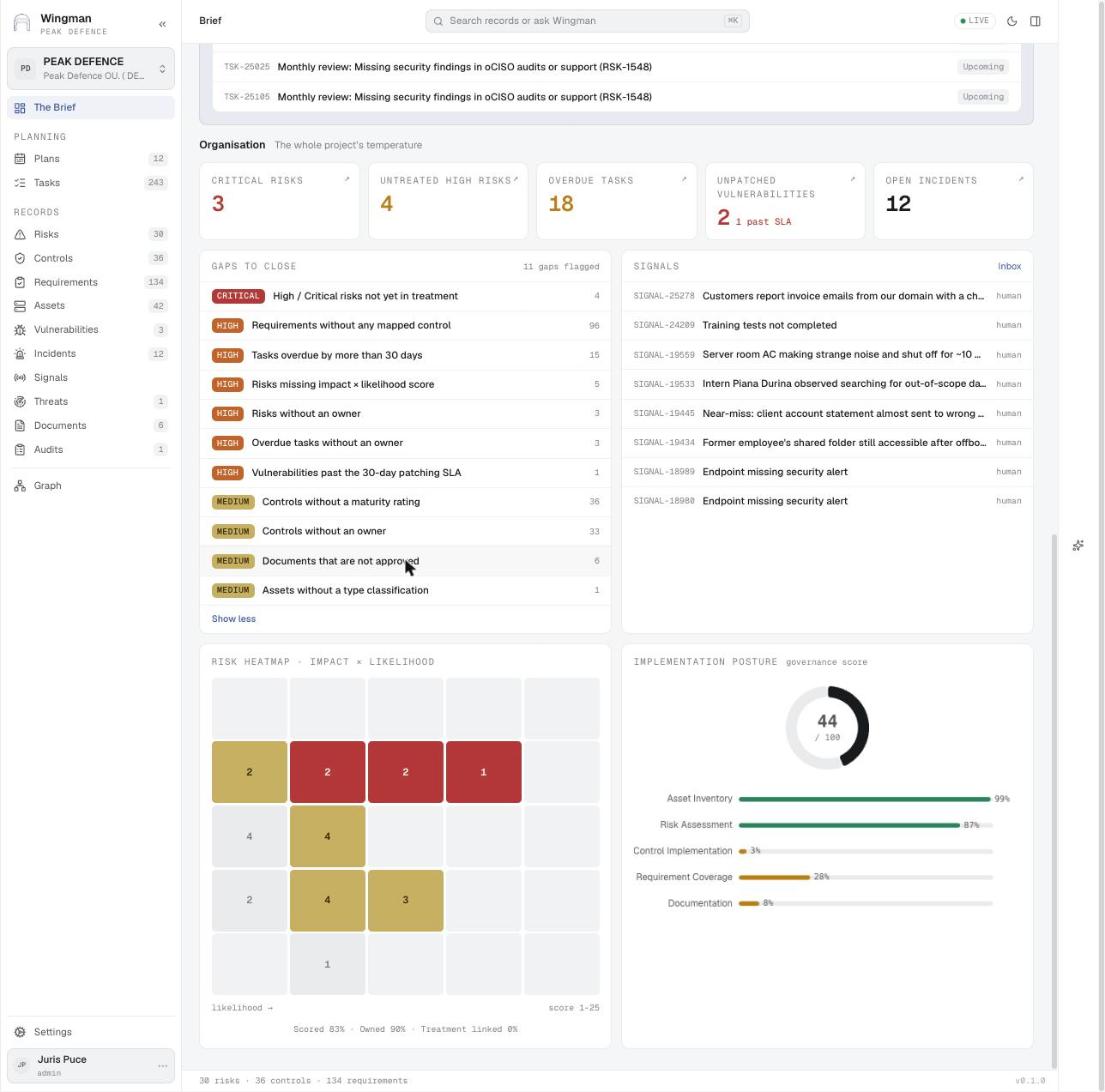
WINGMAN keeps these as linked registers in one model, the way an ISO 27001 ISMS would. The information security office works from one source: what the supervisor, the auditor and the management body see is what the office runs on. The incident reports and the self-assessment report are generated from the same records, so they match what is actually in place.
Videos


Plays from youtube-nocookie.com. YouTube sets no cookies until you press play.
Registers WINGMAN keeps
Each register is a set of linked records in one model, not a separate spreadsheet. Pick an entity to see it in the data model.
Supply-chain register
Each supplier with the services it provides, the data it touches, its criticality, contract terms and evaluation date. Supplier incidents and notices link straight to it.
Asset and service inventory
Services in scope of the law, the systems and data they run on, owners and criticality, with dependencies drawn as links.
Risk register
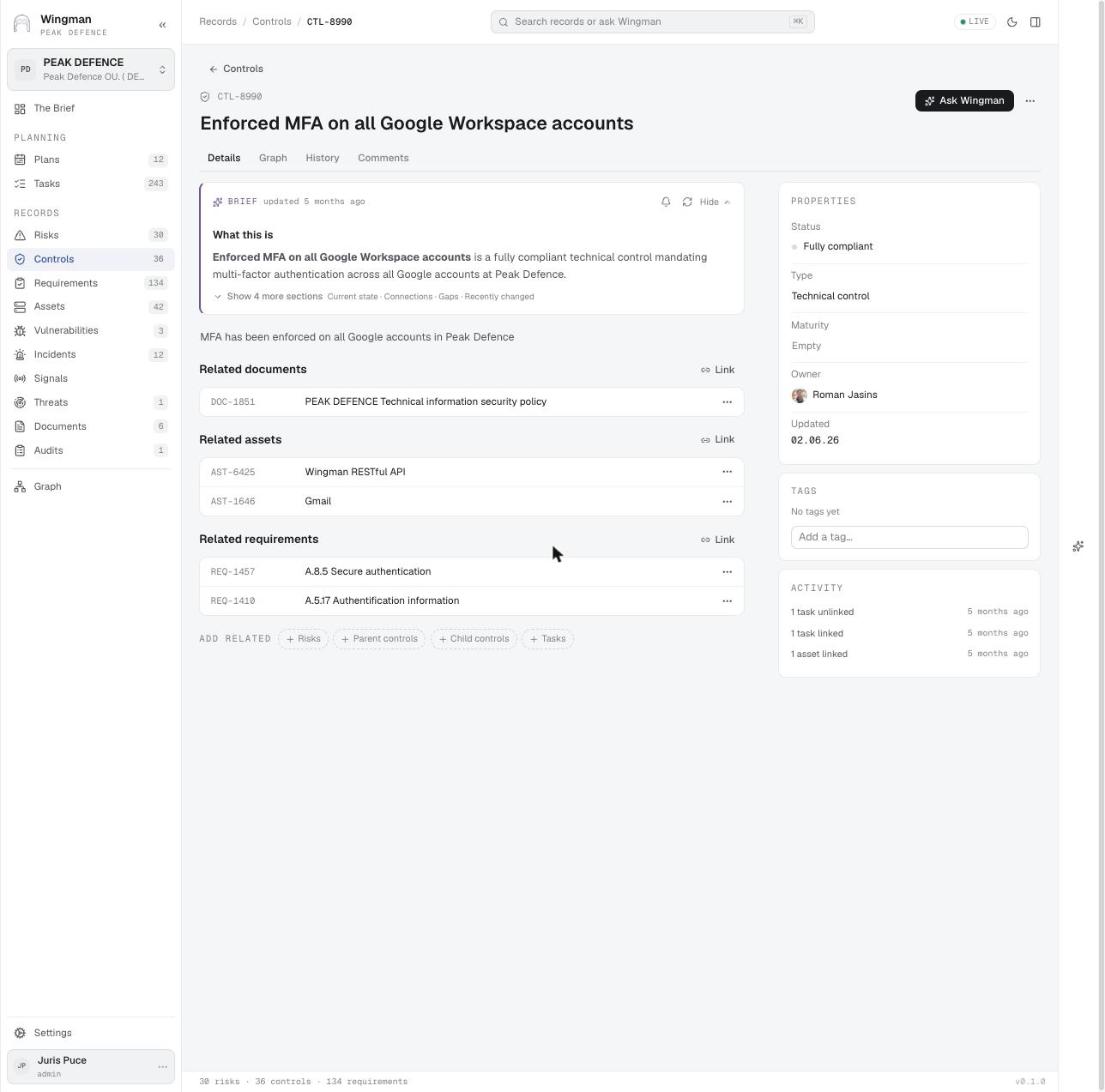
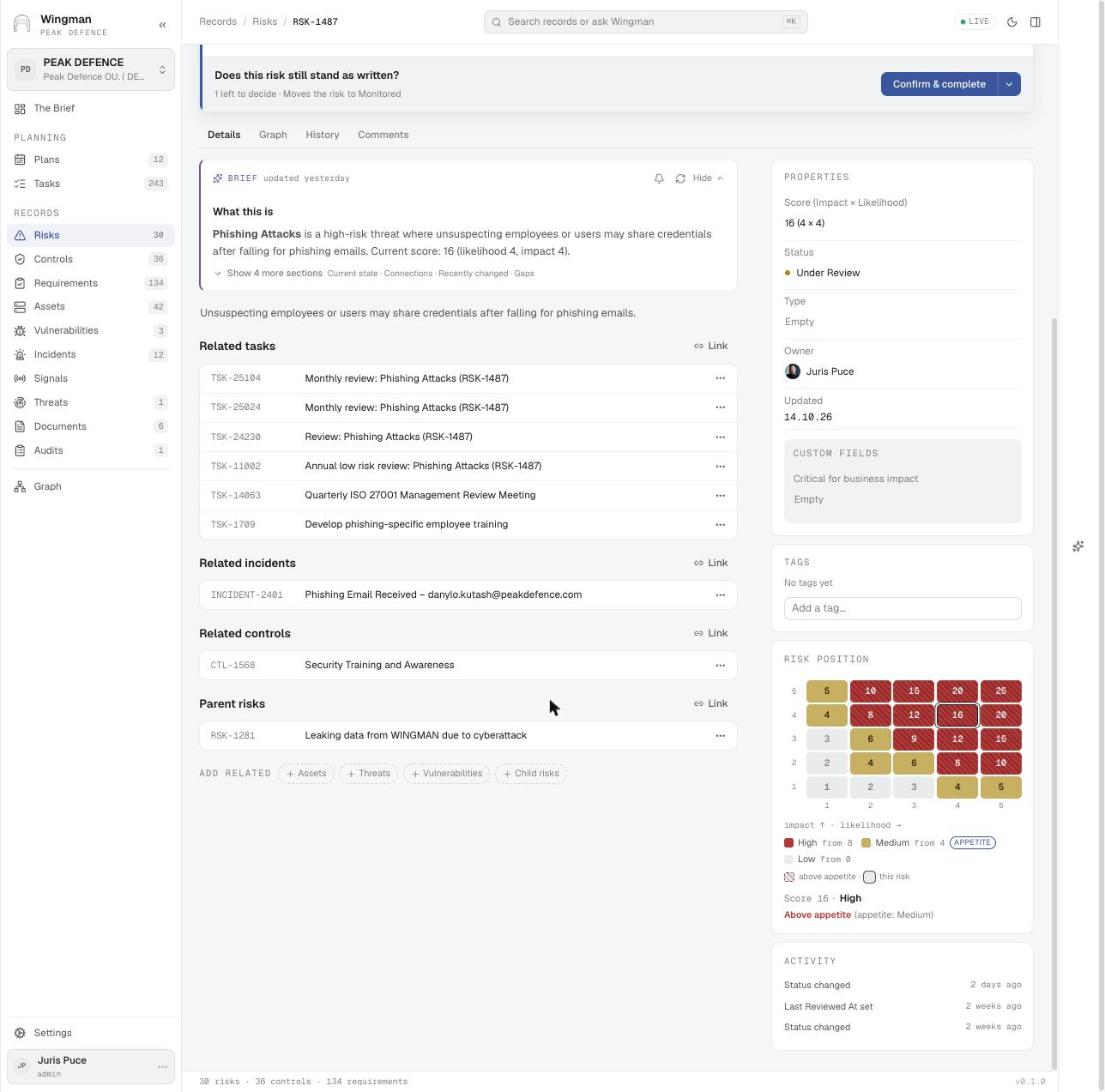
Risks per service, rolled up into entity-level risks, with likelihood, impact, treatment and the controls that reduce them.
Incident register and cyber incident log
Timeline, classification against the regulation's criteria, reports to CERT.LV with their deadlines, and lessons learned linked back to risks.
Vulnerability register
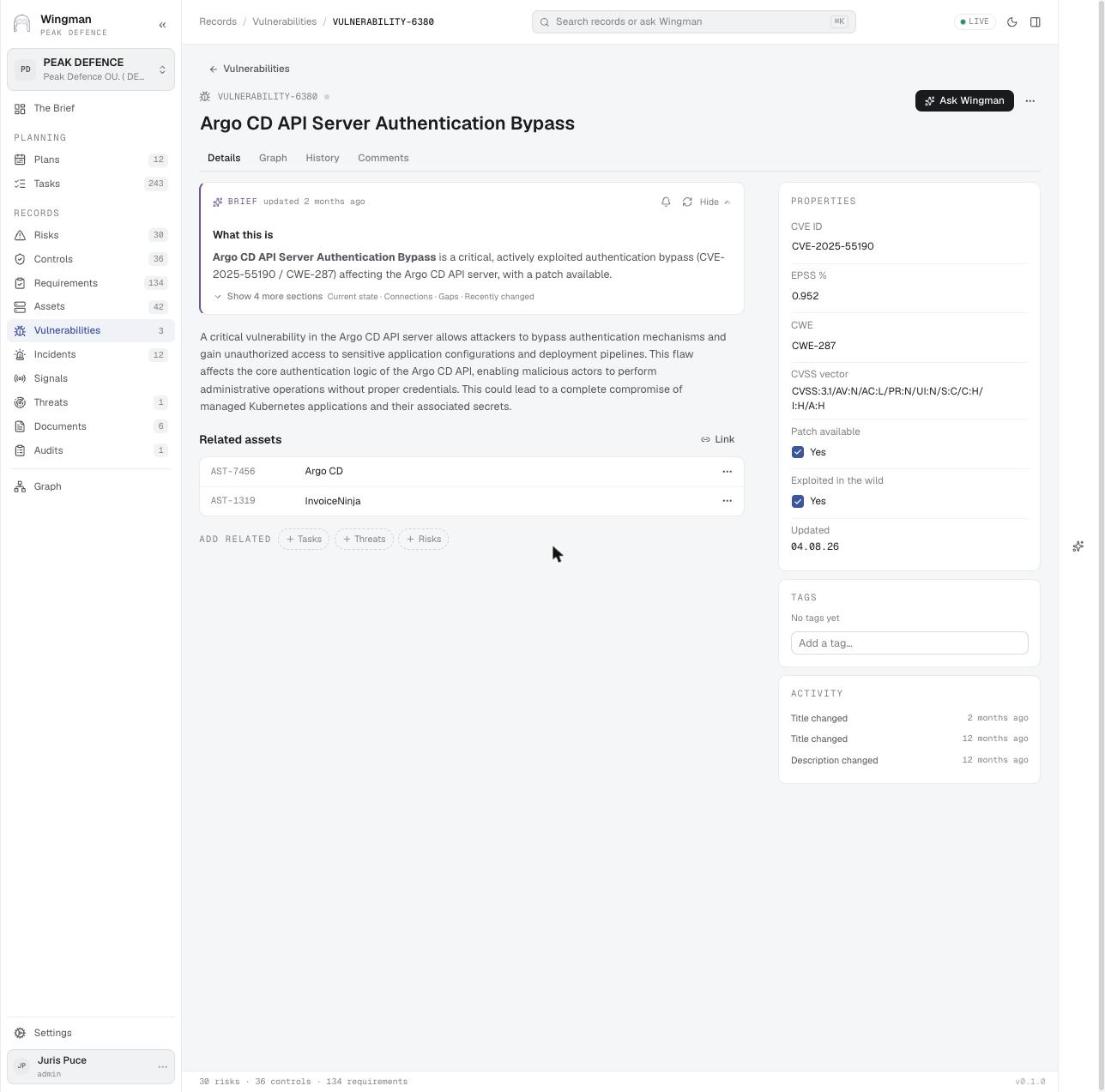
Findings from scans, pentests and advisories, located on assets, with remediation tasks and due dates.
Threat register
Actors and events relevant to the sector, fed by threat intelligence signals and linked to the risks they drive.
Self-assessment results
The fulfilment level of each requirement with the controls and evidence it rests on, generated into the self-assessment report and comparable from one cycle to the next.
Requirements catalogue
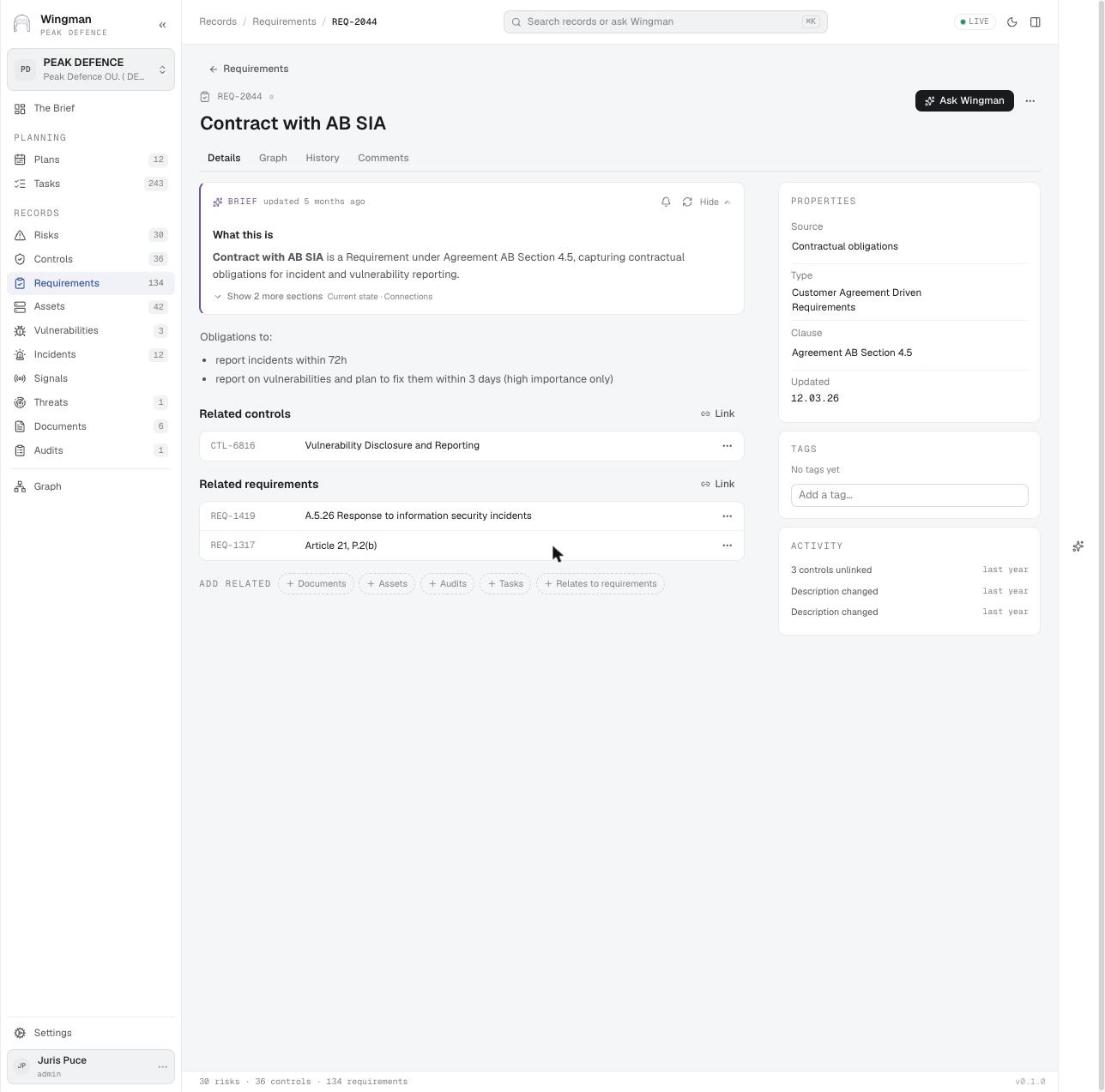
The articles of the law and the minimum requirements of the regulation, one record per requirement, mapped to ISO 27001 and to controls.
Work plan
Corrective actions, treatment tasks and recurring reviews, each with an owner and a due date, rolled up into the annual plan.
The governance cycle on the model
Step through how the regulation runs on WINGMAN records, from scope to proof.
Screens for this stage · Stage 2: Minimum requirements mapped
Screens for this stage · Stage 3: Risks, threats and vulnerabilities
Screens for this stage · Stage 4: Management body accountability
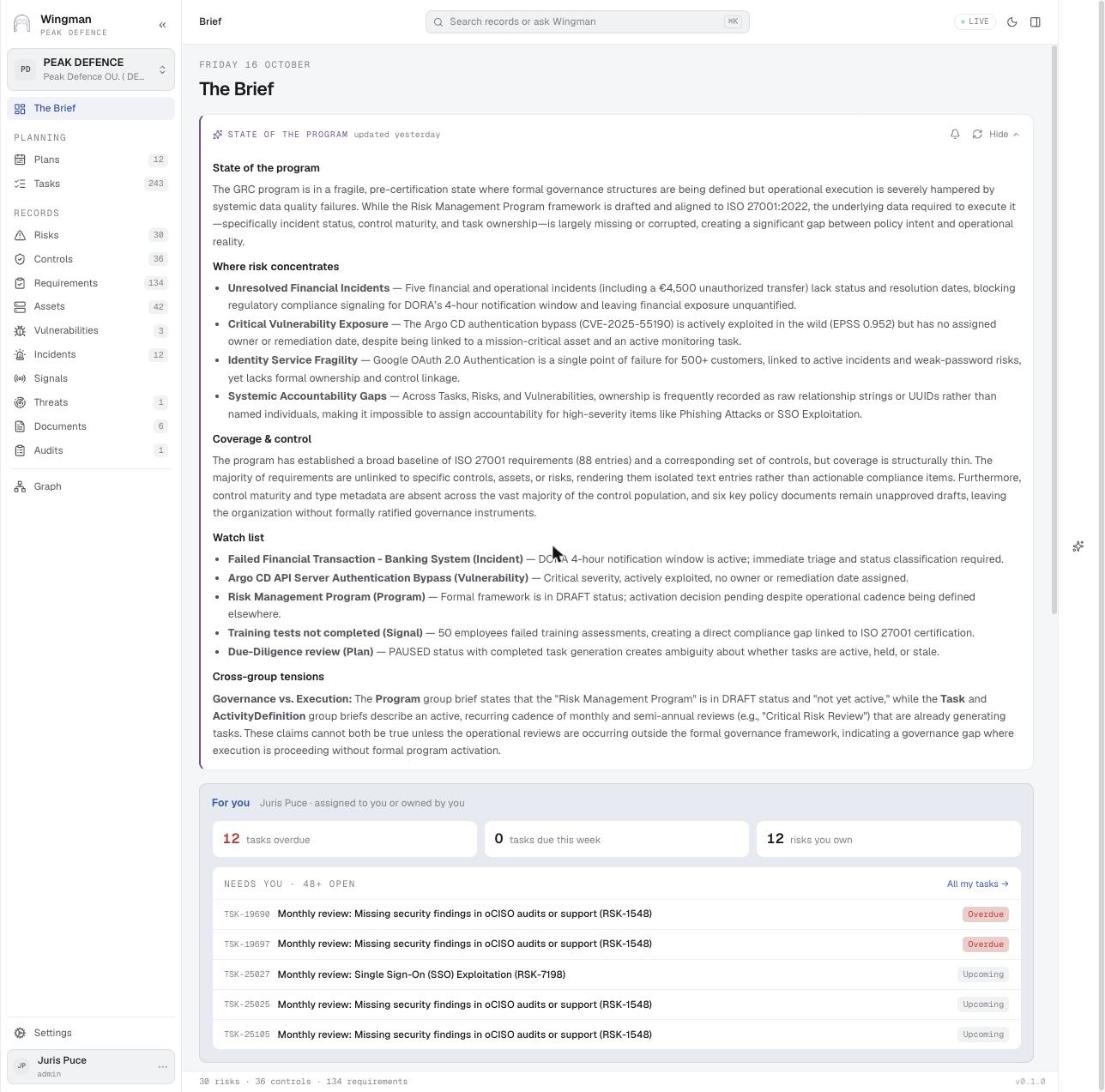
Screens for this stage · Stage 5: Incidents and reporting
 GIF
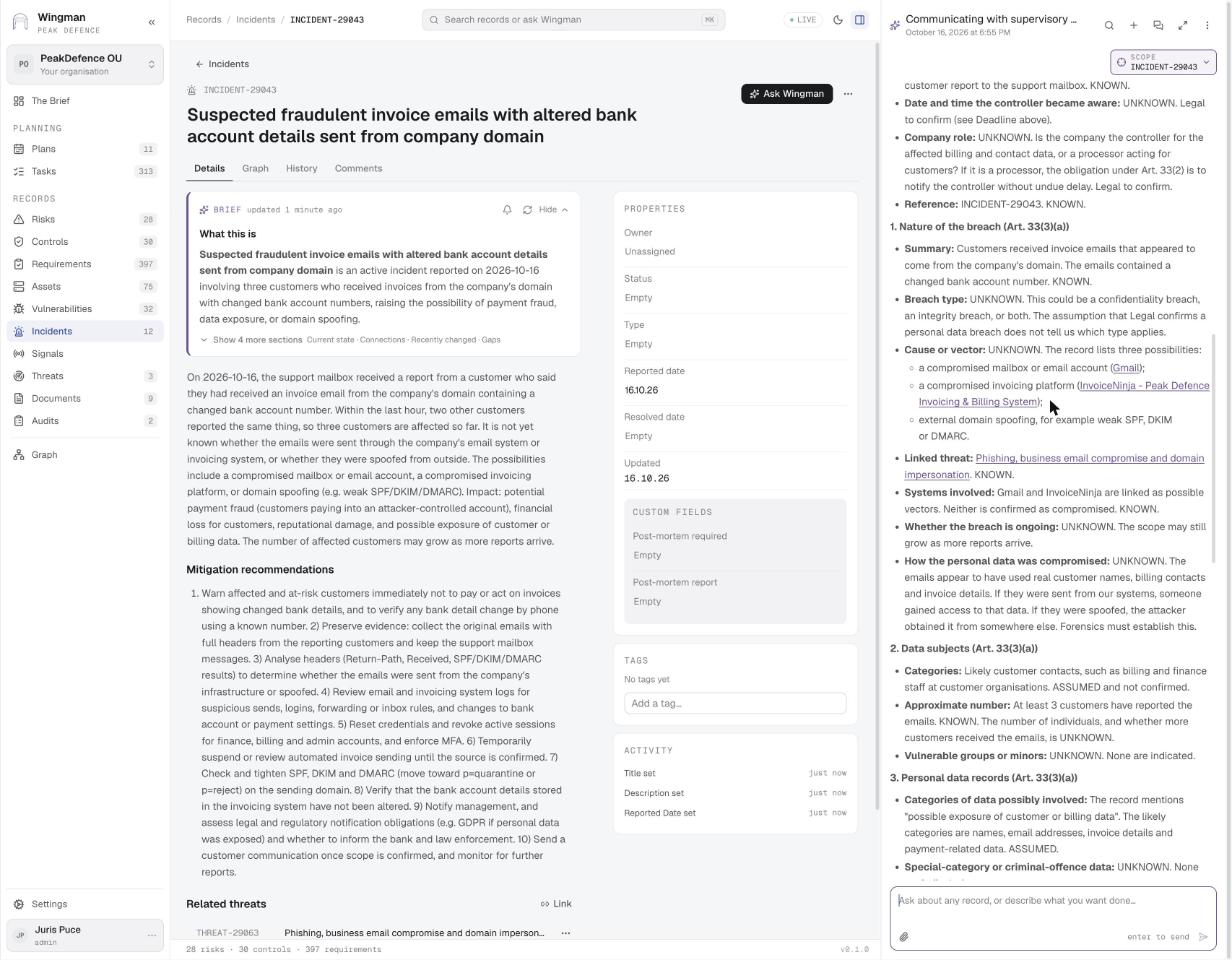
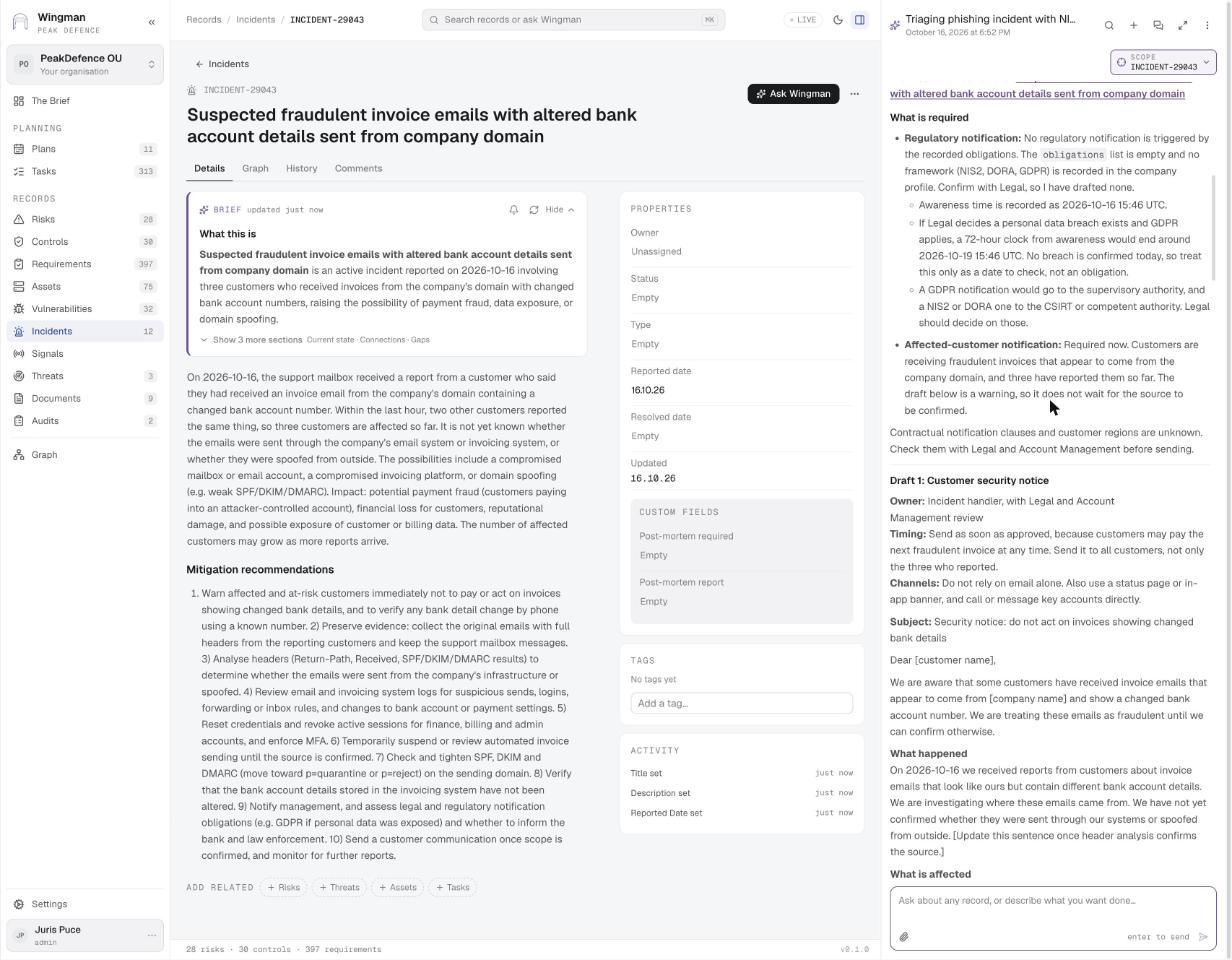
Screens for this stage · Stage 7: Proof and audit
Use cases from this angle
The same use cases, with what changes for this regulation.
Operations
Supplier evaluation
Supply-chain security as the law asks for it. Critical suppliers are evaluated before onboarding, and supplier notices reach the risk register.
Operations
Incident handling
Classification against the regulation's significance criteria, then the early warning in 24 hours, the notification in 72 hours, progress reports and the final report to CERT.LV, drafted from the incident record.
Compliance
New requirements
When the law or the regulation changes, the new clauses are mapped to controls already in place and only the real gaps become tasks.
Risk
Risk review and treatment
An all-hazards risk assessment per service, with treatments the management body can approve.
Risk
Vulnerability impact
Advisories from the national CSIRT and scanner results land on the assets that carry them.
Compliance
Management review
The management body sees exposure, incidents, overdue work and approves the measures, with minutes and decisions kept.
Accountability
Roles and RACI
The cybersecurity manager, the management body and control owners are roles with written duties and deputies.
Assurance
Auditing
The self-assessment and the periodic cybersecurity audit run on the same records, with conclusions per requirement.
Questions it answers
Can we show the supervisor what we run, who supplies it and how it is protected?
From the services in scope to the systems and suppliers they depend on, to the risks on them and the controls that reduce those risks.
Which suppliers would hit an essential service if they failed today?
From the service to the assets it depends on, to the suppliers that provide them, with their criticality and evaluation date.
Are we on time with the incident report?
Each significant incident shows the deadlines that apply, what was sent and when, and what remains.
Can we produce the self-assessment report today?
Yes. From each requirement to its controls, their status and evidence. WINGMAN generates the report with a proposed fulfilment level per requirement, and gaps are listed before anyone signs.
Is this incident significant, and what must CERT.LV receive?
The incident record shows the classification against the regulation's criteria with reasons, the reports due and their deadlines, and drafts of each report.
Which minimum requirements have no working control?
Requirements with no control, or with controls whose evidence has expired, appear as gaps before the audit does.
Other sectors and regulations
Financial sector – DORA, MiCA and supervisory expectations
Run operational, financial, reputational and other non-financial risk management on one model, and catch the events that should move it.
ISO 27001 and SOC 2 Type 2
Keep the whole ISMS in one model, with control ownership, recurring reviews, management review and evidence that holds up over an audit period.
AI governance – ISO 42001, EN 18286 and the EU AI Act
Treat each AI use case as an asset with its own risks, controls and work plan, and show conformity with the EU AI Act from the same records.
Cyber Resilience Act
Design CRA compliance into how products are built and supported, from risk assessment and SBOM to vulnerability handling and reporting.
GDPR and data protection
Keep the record of processing, DPIAs, processors, data subject requests and breaches as linked records, so accountability can be shown at any time.